- 112 privately financed condominiums in direct proximity to the Alte Donau
- Green and liveable: modern architecture, surrounded by a natural environment and featuring excellent connections
- Scheduled completion: likely at the end of 2027
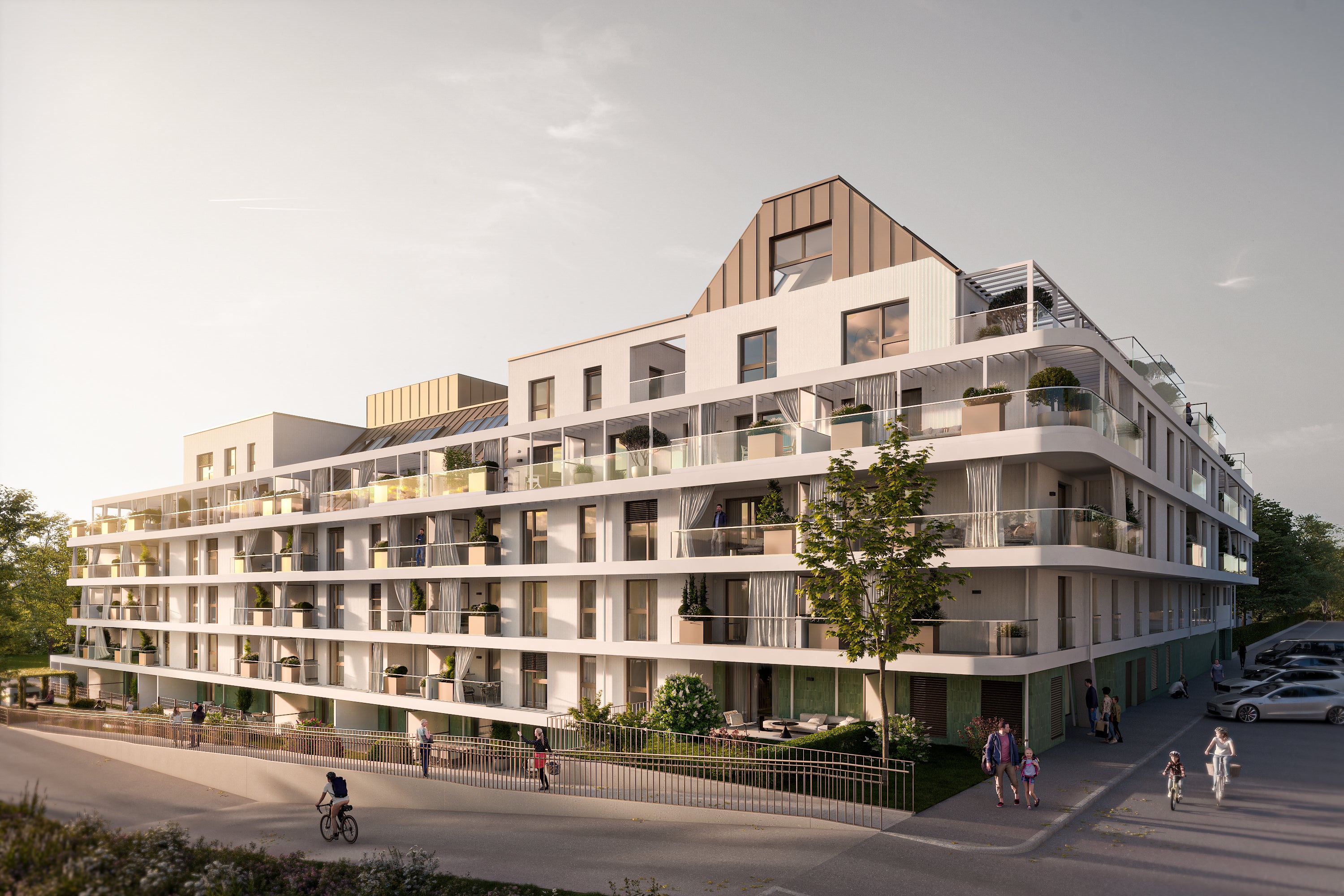
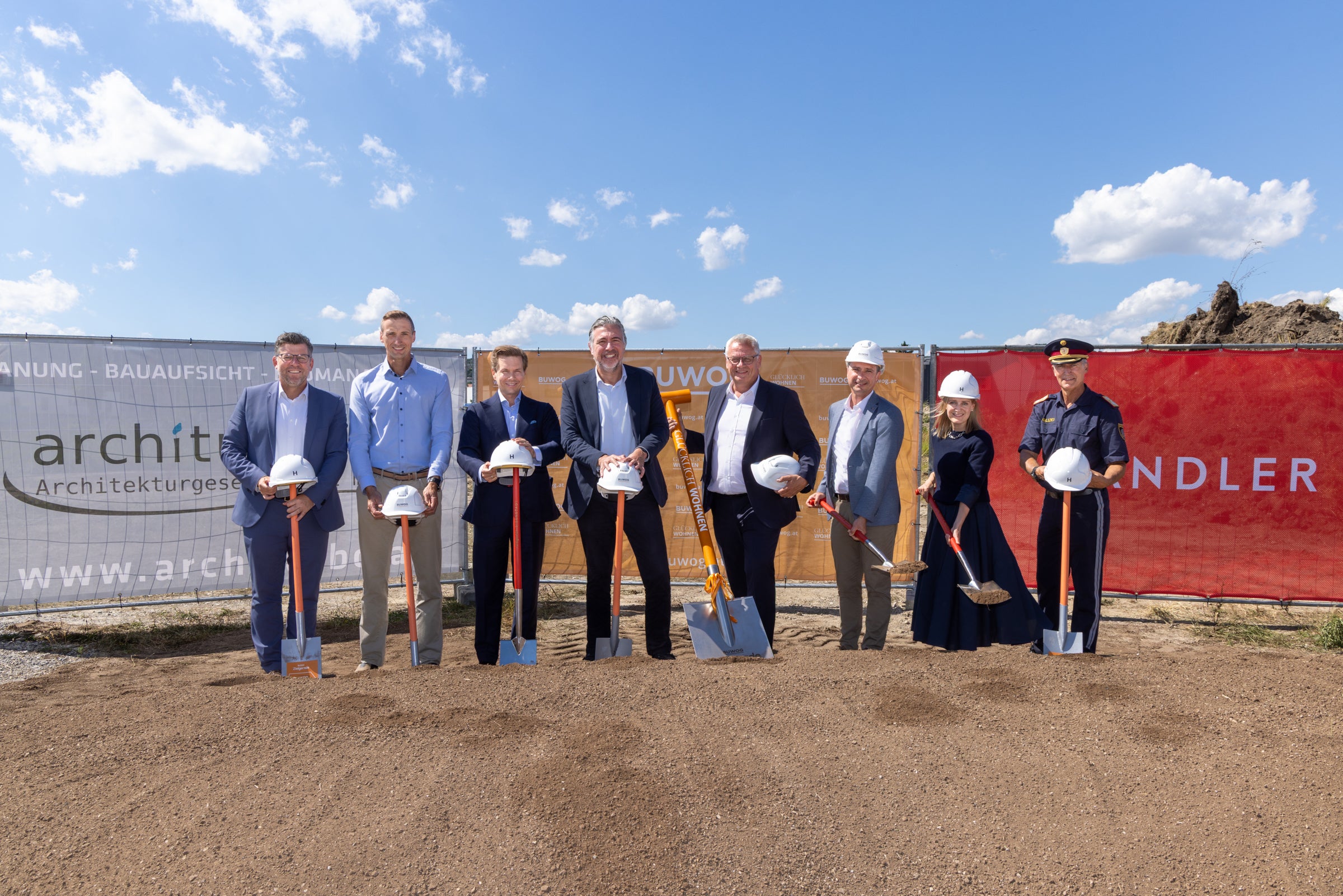
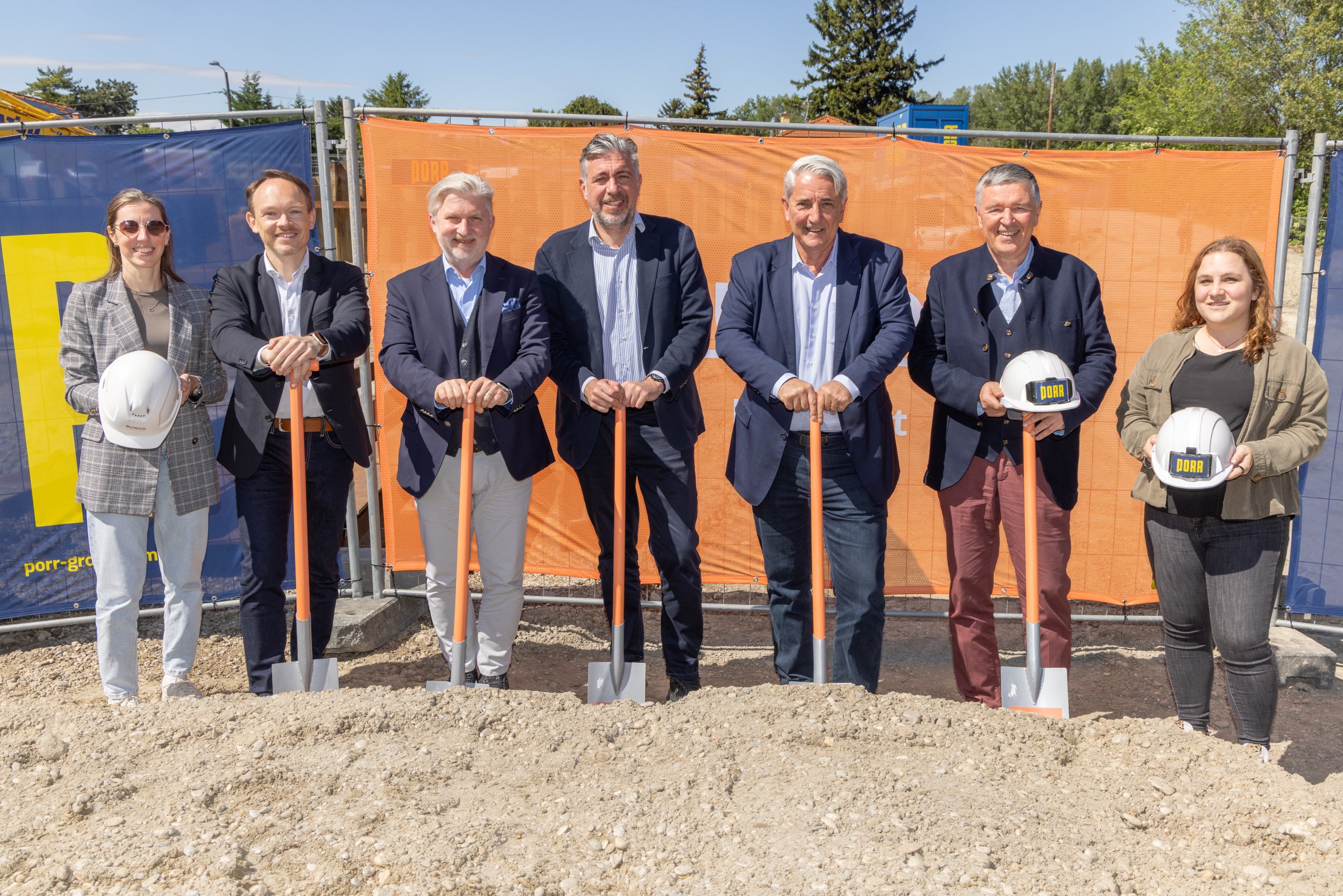
Waterfront living – a dream come true in the new BUWOG development “Lange Allee”. Just a few minutes’ walk from the Alte Donau (Old Danube), nestled in the tranquil atmosphere of the likewise named street, and providing 112 privately financed condominiums, this development is more than a mere place to reside. Designed by the architectural firm BKK-3-Architekten, the residential building features well-though-out architecture combined with a sophisticated concept that aims to meet every requirement of modern living. Last Wednesday, 13 May, the symbolic groundbreaking ceremony – performed by BUWOG Managing Director Andreas Holler, District Manager Ernst Nevrivy and Porr Building Construction Director Alfred Vandrovec – marked the official start of construction.
“With every new construction project we launch, we are fulfilling our responsibility as a property developer to bring urgently needed housing onto the market. We are very proud that the ‘Lange Allee’ project represents another significant contribution to the creation of modern housing. We are therefore optimally meeting the considerable demand for apartments in prime locations as well as for contemporary housing that offers a high quality of life,” says Andreas Holler, BUWOG’s managing director responsible for development.
District Manager Ernst Nevrivy was also present at the groundbreaking ceremony and emphasised the following: “As district manager, I am delighted that such an attractive project is providing premium new apartments in Donaustadt. We are a rapidly growing district, and any form of housing is a boon.”
Architect Johannes Mayer of BKK-3-Architekten on the architectural vision behind the project currently under construction: “The residential building on Lange Allee is never still. Curtains flutter, shadows wander, and the balance between openness and enclosure continually varies. Glass, fabric and greenery form a living skin that brings life to the outside world. People do not simply reside here; they step outdoors and find themselves in the midst of the gentle transition between the interior and exterior.”